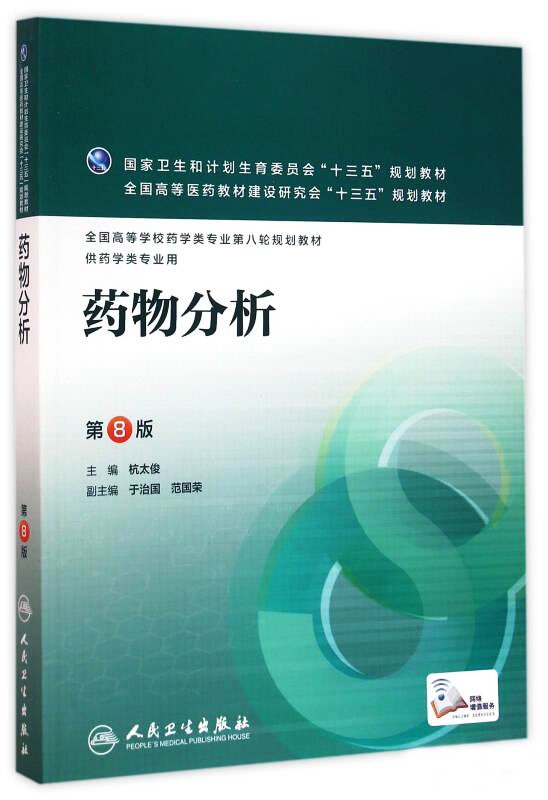
|
Introduction of Pharmaceutical Analysis
Pharmaceutical
analysis is one of the most important course to the students of College of
Pharmacy, and a specialized course for the
students of Pharmacy. It is one of the most important fields in pharmaceutical
science.
Pharmaceutical
analysis is a comprehensive applied analytical science that uses the classical
and modem analytical measures to study the property of drugs , to establish the
drugs standards , and to control the quality of drugs and also to be applied to
drug discovery, pharmacology , toxicology , pharrnacodynamics, metabolism,
pharmacokinetics, bioavailability requirements , formulation development ; and
drug use including therapeutic drug monitoring (TDM
) , drug abuse monitoring , overdosage monitoring , analytical toxicology and
drugs in sport ( doping control ) .
Pharmaceutical
analysis is a science not only establishing and developing methods of quality
control of drugs , but also supplying necessary preparatory and service for the
researchers and developments of other fields in the curriculum , such as
Pharmaceutical Engineering .
Objectives
After
study this course, the students are expected to learn:
(1)
To set up a conception in students thought that the qualities of drugs are the
most important. Make sure that we should strictly control the qualities of
drugs in all sectors of productions, supplies and clinical applications.
(2)
Correct use of quality standard of drugs. Students will be familiar with
selecting analytical methods according to the chemical structure,
characterization and state. Practically grasp the principle and methods of
identification, impurity detection and assay of drugs.
(3)
To develop essentially practical skills, and the usage of modern analytical
apparatus.
Main Contents
Chapter
1 The Study of the Quality Standards of
Drugs and the overview of Pharmacopeias
Chapter
2 The identification test of drugs
Chapter
3 The impurity tests of drugs
Chapter
4 Method and validation for Assay
Chapter
6 The Analysis for Nonsteroidal
Anti-inflammatory Drugs
Chapter
7 The Analysis for Epinephrine Drugs
Chapter
8 The Analysis for Local Anesthetics
Chapter
9 The Analysis for Dihydropyridine Drugs
Chapter
10 The Analysis for Sedative-hypnotic
Drugs
Chapter
11 The Analysis for Phenothiazine
Antipsychotic Drugs
Chapter
13 The Analysis for Anticholinergic
Drugs
Chapter
14 The Analysis for Vitamins
Chapter
15 The Analysis for Steroid Hormones
Chapter
16 The Analysis for Antibiotics
Chapter
17 The Analysis for Quinolone &
Sulfonamide
Chapter 18 Introduction of the Analysis for Preparations
|

 Introduction